
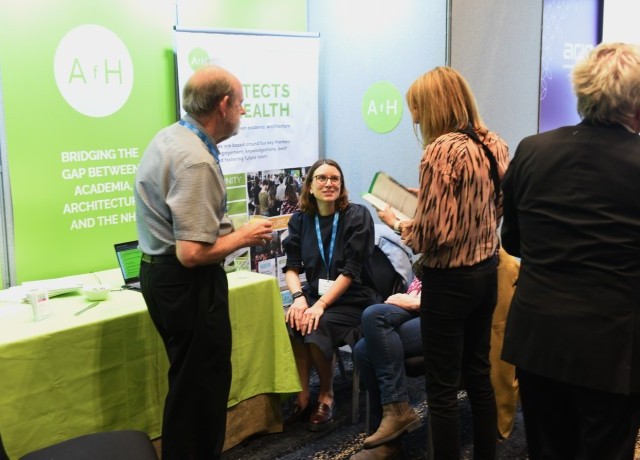
Architects for Health programme
The Architects for Health Networking Area features panel discussions and conversations across the two-day conference, curated under four workstreams: Knowledgeshare, Best Practice, Strategic Engagement, and Fostering Future Talent.
The full detailed agenda of talks and panels will be announced shortly
Networking programme partner

Monday 15 June
Agile not fragile
10.45 - 12.30
Agile not fragile

John Cooper
President, Architects for Health; Director and co-owner, JCA, United Kingdom
John is a leading figure in healthcare design and has been a principal in practice for 35 years. He is actively engaged in reshaping the healthcare environment and improving and re-forming its architecture, combining an expert understanding of health planning with genuine design skills at both a strategic and a detailed level.
He set up JCA in 2009 with Hrafnhildur Olafsdottir. The practice has worked in the UK, Ireland, South Africa, Iceland and Australia and is currently working in Switzerland and Palestine. This provides John with an international perspective and a wide ranging knowledge of best practice. He has led government report panels and provided peer review on major projects in the UK and Australia.
John co-founded Avanti Architects in 1981, pioneering social architecture and designing a wide range of residential, community and regeneration projects. In 1995 he led the design team for the ACaD Centre and on the strength of this project Avanti developed rapidly as a major healthcare practice under his leadership.
After 20 years at Avanti, John joined Anshen Dyer (reformed as Anshen + Allen in 2006) as Healthcare director and in his seven years at the practice A+A won and designed 12 major projects from complex tertiary hospitals for oncology, paediatrics and maternity to innovative community facilities and competition winning mental health units.
He is a regular speaker at conferences in the UK and overseas and has written for the major architectural journals in the UK. He was chair of Architects for Health (2009–2014) and is still actively engaged in this organisation.

Richard Darch
Founder of Archus, Archus, United Kingdom
Richard has over 20 years experience in healthcare. Following a Masters in Health Economics Richard worked as a Research Fellow at the University of York. Richard went on to found a number of businesses focusing on the planning development and delivery of health infrastructure. In 2017 Richard established Archus, a specialist health infrastructure advisory practice.
Throughout his career Richard has focused on his principle interest of the delivery of high quality infrastructure in healthcare and harnessing the best of public and private sector thinking in the planning, design and delivery of new healthcare buildings.
Richard is a recognised thought leader in the area of infrastructure and has published in respected Journals and policy institutes and presented at international conferences.
Richard has led the Archus team and capability on developing guidance which focuses on the opportunity for standardised designs in new hospital developments that can be applied to multi billion health infrastructure programmes. He is taking this thinking into new markets for Archus, particularly Canada and Australia.
Richard is an Associate Fellow of the Nuffield Trust and sits on the SALUS Global Advisory Board as part of the Congress for European Healthcare Design.

Matthew Tulley
Redevelopment director, Imperial College Healthcare NHS Trust, UK
Agile not fragile
Abstract Copy
Does centralisation solve the problem – or does decentralisation deliver better healthcare outcomes for all?Knowledgeshare
-
Knowledgeshare
Knowledgeshare
Abstract Copy
This session will explore three key facets of healthcare design: creative health, neighbourhood health, and mental health. Beyond the bricks and mortar, what do we as designers need to do to deliver spaces that support patient and staff wellbeing, enhancing recovery and care?13.45 - 14.30
Embedding the Arts into Hospital Design: A Call for Policy and Practice

Alice Green
Associate Principal Architect, Arcadis, United Kingdom
Alice Green is an Architect, Interior Designer and Associate Principal at Arcadis and has specialised in health for over 17 years. Alice incorporates a holistic approach to design with a focus on service user wellbeing and finding innovative ways to create cohesive healthcare environments. Alice also sits on the board of Directors of Architects for Health, a non-profit organisation that advocates for best practice in healthcare design.
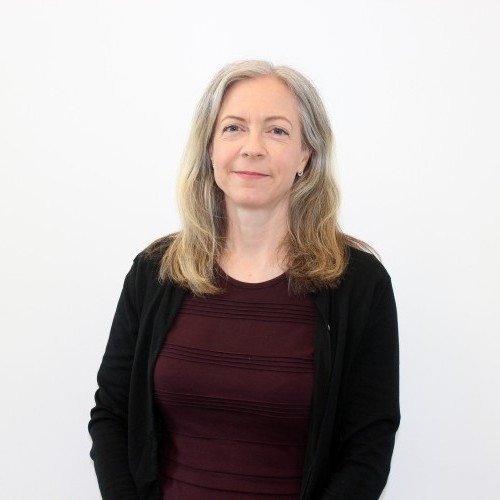
Laura Waters
Director, National Arts in Hospitals Network, United Kingdom
Laura Waters is Co-Director of the National Arts in Hospitals Network UK, the membership network for arts managers working in UK hospitals.
In this role, Laura leads on national arts in health projects and promotes arts in hospitals throughout the UK and internationally.
With a dual background in Environmental Psychology and Music Performance, Laura combines these two areas of expertise in her work as Head of Arts for the University Hospitals of Derby and Burton, providing high quality artistic and cultural experiences for staff and patients across five hospital sites.
As a member of the University of Bristol Sensing Spaces of Healthcare project, Laura champions these guidelines to incorporate latest research on the senses into modern hospital design.

Ruth Charity
Arts co-ordinator, artlink, Oxford University Hospitals NHS Foundation Trust, UK
Ruth Charity has worked for over 25 years curating and commissioning contemporary art, for the past 15 years focusing on work for public spaces, particularly in the field of arts and health.
Her background is in visual arts curation – working for the British Council’s Visual Arts Department (1989–92) touring exhibitions overseas, as a curator at The Photographers’ Gallery, London (1992–97), Curator of the Mead Gallery at Warwick Arts Centre (1997), and Assistant Director of Artpoint, the public art commissioning agency for the South of England (1997–2005).
Ruth has always been interested in commissioning new work by artists in response to particular contexts, in supporting artists in taking their work in new directions, and involving and engaging the public in the development of new work.
In 2007 she founded artlink, the arts programme for Oxford University Hospitals NHS Foundation Trust. Past projects include a five-storey wall painting by Michael Craig-Martin for the Children’s Hospital atrium; a £250,000 integrated art programme for a new cancer centre at the Churchill Hospital; an extensive photographic project by Jan von Holleben to provide distraction on routes from children’s wards to theatres; and a Wellcome-funded collaboration by artist Susan Morris and a chronobiologist to create a series of large tapestries reflecting sleep/wakefulness patterns.
Additional freelance work has included the curation of a programme of work by photographer Gina Glover for the Oxford Fertility Centre; a series of commissions for new library and student facilities at Oxford Brookes University; and work on a public art strategy for the Midland Metropolitan Hospital in Birmingham (for Willis Newson).
Ruth has written on contemporary art in catalogues and journals. In 2005 she edited the publication 'ReViews: Artists and Public Space' (Black Dog Publishing), an extensive review of Artpoint’s projects, focusing on the artist’s experience within public art practice.
14.45 - 15.30
In Conversation: Post Occupancy Evaluation: unlocking insight, value and better future design
Best practice
-
Best practice
Best practice
Abstract Copy
How do we raise standards in the delivery of healthcare design, delivery and ultimately, patient outcomes? In this session, we will be joined by the Healthcare Infection Society, which will share insights on the Built Environment Infection Prevention Initiative (BEIPI) and how cross-industry collaboration is accelerating changing approaches to the design of high-risk healthcare environments.Our second conversation will invite shortlisted practices for the 2026 EHD ‘Design for Neighbourhood Health’ Health Award to compare and contrast ‘best practice’, internationally.
15.45 - 16.25
Healthcare Infection Society’s cross industry collaboration - BEIPI (Built Environment Infection Prevention Initiative): current position and next steps

James Gordon
Associate director, P+HS Architects, United Kingdom
James is associate director and healthcare lead at P+HS Architects with over 20 years’ experience in healthcare design and delivery. He has led complex acute and diagnostic projects across multiple NHS trusts, including critical care expansions, hybrid theatres, emergency departments and cancer facilities . His work draws on lessons learned across live hospital programmes, with a focus on patient flow, infection control, technical compliance, and ensuring the built environment actively supports safe, efficient clinical operations.

Manjula Meda
Consultant Clincial Microbiologist and Infection Control Doctor, NHS, United Kingdom
"Dr Meda completed microbiology specialist registrar training from KSS deanery St. George's Hospital and Frimley Park hospital where she was the first microbiology registrar to train, London, following several years in training in Paediatrics . She transitioned into Infection Prevention role in the NHS in 2009. She is currently employed at Frimley Health NHS Foundation, a large Trust in the Southeast of England, as a consultant microbiologist and ICD. Manjula’s special interest lies in the built environment especially around water and wastewater safety in healthcare. She has introduced water free concepts in patient care in the U.K . She currently holds the position of Chair of the Healthcare Infection Society (HIS). She is actively involved in research and been part of many national clinical trials and working collaboratively with other organizations. In this role she has led the development of a HIS water and wastewater safety course and the formation of BEIPI (Built Environment Infection Prevention Initiative) bringing together all those involved in building hospitals from architects to IPC teams together with the aim to build safer hospitals. She is passionate about bringing innovation and transformation required in current and future healthcare buildings to reduce risk of AMR transmission from the built environment."

Rachelle McDade
Director of healthcare planning, Currie & Brown, UK
Rachelle is a Director in the Healthcare Advisory Team at Currie & Brown, with 30 years of experience delivering major healthcare projects in the UK and internationally. She specialises in large‑scale master planning, reconfiguration programmes and the redesign of healthcare pathways, driving improvement through extensive stakeholder collaboration. Rachelle leads complex healthcare estate programmes to successful, timely and cost‑effective completion. Rachelle is part of the BEIPI committee, committed to raising awareness of infection control within the built environment.
16.30 - 17.00
Best Practice Neighbourhood Health design: international comparisons

Ruairi Reeves
Director, Medical Architecture, UK
Ruairi has over 22 years of experience in healthcare design. He has played a key role in the delivery of a number of significant mental health and acute health projects, as well as international projects in Ireland and Australia. This includes the National Forensic Mental Health Service Hospital in Dublin designed with Scott Tallon Walker Architects, which won the Building Better Healthcare Grand Prix Design award in 2023.
Ruairi is a Director, leading our London studio alongside Bob Wills. He plays an active role in the promotion of design quality within the practice. He is passionate about creating therapeutic environments in healthcare, frequently speaking on the subject, and is a Director of Architects for Health which promotes best practice. He is currently leading our team on a range of projects for University College London Hospitals, several community projects in the UK, and a new trauma centre for the Mater Misericordiae University Hospital in Dublin, in partnership with Scott Tallon Walker Architects.
Tuesday 16 June
Strategic engagement
-
Strategic engagement
Strategic engagement
Abstract Copy
Architects for Health has a unique focus on planning and design quality for health infrastructure. Our work reaches across the UK and internationally in equal measure. We aim to be a world leader in promoting healthcare design.Over recent years our membership has grown from a few dozen people to over 750 members from 500+ organisations. This is a diverse and valuable community, comprising architects and designers, engineers, healthcare professionals, clinical planners, equipment suppliers, developers and contractors. Our members are engaged in the wide range of activities that contribute to making the healthcare environment.
Much of our effort has been as a forum for sharing best practice, knowledge, innovation and thought leadership in the built environment. Our partnership here with Salus at the European Healthcare Congress is the centrepiece of that work.
However, that is not enough. To achieve our goal, we need to work beyond our organisation, partnering with professional and technical associations, academic organisations, industry and commerce and using our leverage to influence policy-making bodies that govern planning, funding and quality expectations.
We don’t expect to develop an action plan - the purpose of this panel is to get the ball-rolling. To gather ideas and suggestions from the audience to strengthen our strategic ambition – or perhaps provide a reality check on what can realistically be achieved.
10.45 - 11.35
Engagement with Policymakers: Can AfH behave more like a think tank?

Jaime Bishop
Chair, Architects for Health, UK
Jaime is a director at Fleet Architects and chair of Architects for Health, and a proven project designer, competition winner and studio leader. During his professional career he has been responsible for multiple projects with values ranging between £8 and £120 million and was one of three associate directors responsible for the management of a 65-person firm under a managing director.
He is an experienced all-round designer with specialist skills in healthcare and has sat on the executive board of Architects for Health (AfH) since 2006. He has significant experience as the lead architect in major PFI schemes, including the preparation of a reference project for a $2 billion teaching hospital in Adelaide, Australia. He has been a visiting tutor at various universities since 2002, including Nottingham, Cardiff and London Metropolitan. Since 2012, Jaime Bishop and Richard Henson have been teaching third-year degree level students at London South Bank University and established their studio, the Transpontine Laboratory, based at the university, in 2014.
Jaime was educated at the Royal College of Art, Bath University and the TU Delft Highrise Scholarship. He has been ARB registered and a member of RIBA since 2006. He is a recognised figure in the healthcare sector with connections throughout the industry. Jaime has detailed knowledge of traditional and private finance initiative (PFI) contracts, fee negotiation and project cost control. Jaime has sat on the board of the City and Hackney NHS Clinical Commissioning Group and social enterprise East London Integrated Care. He has also served as an elected governor at the Homerton University Hospital NHS Foundation Trust.

Christopher Shaw
Founder, Medical Architecture, UK
Christopher has over 30 years of experience in healthcare design, having founded Medical Architecture in 1991. He has been closely involved in the design of over 70 major hospitals worldwide and lead the design of various award-winning health projects. Christopher was Chair of Architects for Health until 2022, a forum for sharing best practice and innovation in healthcare design, both in the UK and internationally.
Now retired, Christopher works as a consultant to the practice, sharing the knowledge and insight he has amassed over many years as a thought leader in the field. Christopher’s approach to healthcare design values improved clinical outcomes and an enhanced human experience of treatment and care. He draws on experiential and evidence-based design to promote the delivery of beautiful buildings that are adaptable to the changing needs of society.
11.40 - 12.30
Developing guidance that delivers: standardising the structure for HBN – what do we need and why?
Jaime Bishop
Chair, Architects for Health, UK
Jaime is a director at Fleet Architects and chair of Architects for Health, and a proven project designer, competition winner and studio leader. During his professional career he has been responsible for multiple projects with values ranging between £8 and £120 million and was one of three associate directors responsible for the management of a 65-person firm under a managing director.
He is an experienced all-round designer with specialist skills in healthcare and has sat on the executive board of Architects for Health (AfH) since 2006. He has significant experience as the lead architect in major PFI schemes, including the preparation of a reference project for a $2 billion teaching hospital in Adelaide, Australia. He has been a visiting tutor at various universities since 2002, including Nottingham, Cardiff and London Metropolitan. Since 2012, Jaime Bishop and Richard Henson have been teaching third-year degree level students at London South Bank University and established their studio, the Transpontine Laboratory, based at the university, in 2014.
Jaime was educated at the Royal College of Art, Bath University and the TU Delft Highrise Scholarship. He has been ARB registered and a member of RIBA since 2006. He is a recognised figure in the healthcare sector with connections throughout the industry. Jaime has detailed knowledge of traditional and private finance initiative (PFI) contracts, fee negotiation and project cost control. Jaime has sat on the board of the City and Hackney NHS Clinical Commissioning Group and social enterprise East London Integrated Care. He has also served as an elected governor at the Homerton University Hospital NHS Foundation Trust.

Iona McAllister
Associate director, MJ Medical, UK
A registered clinician and hospital operational manager, Iona has a proven track record of delivering large-scale healthcare facilities. She has strong experience in operational readiness, ensuring hospitals can deliver healthcare safely and effectively from day one. From the delivery of major regional cardiac centres to the development of the first healthcare buildings from the New Hospital Programme, she is a confident and experienced team leader.
Iona is passionate about delivering efficiency in healthcare operations through effective design and collaboration.

Matthew Hird
Head of healthcare, TODD Architects, UK
Matthew is head of healthcare at TODD Architects. He is a highly experienced and well-respected architect who is dedicated to the creation of quality healthcare environments. Matthew is responsible for leading TODD’s healthcare strategy across all studios in the UK and Ireland to deliver a growing portfolio of transformational healthcare projects.
Fostering future talent
-
Fostering future talent
Fostering future talent
Abstract Copy
Our ‘fostering future talent’ pillar celebrates the work of architecture and design students as they build their career in healthcare design, supporting them on their journey to professional practice. In this session, we will invite participants in our programmes to share their stories. Our collective conversation will focus on ‘The Agile Architect: Widening access to healthcare architecture for a stronger, more resilient profession. What do architects new to healthcare need from the sector to help build their careers? How do we translate inspirational research from paper to practice?14.00 - 14.25
Cybernetic Field Hospitals: Integrating Advanced Technologies into Post-crisis Healthcare

Habban Ali
Associate architect, Reddy Architecture and Urbanism, Ireland
Habban Ali is a chartered architect (MRIAI) with a focus on the healthcare sector and education sector. Based in Ireland, he is an associate architect at Reddy Architecture + Urbanism, contributing to complex public-sector projects, including acute healthcare and mental health facilities. He has experience across planning, technical design and multidisciplinary co-ordination within highly regulated clinical environments.
Habban holds post-graduate qualifications, including an Executive MSc in Healthcare Facilities from the Bartlett, UCL. His research examined cybernetic field hospitals and adaptive digital infrastructures for post-crisis acute care, developing system-level frameworks for resilient and scalable emergency response.
His work bridges practice and research, advancing healthcare resilience through modular construction, digital integration and long-term adaptability under climate and crisis pressures
14.30 - 15.30
The Agile Architect: Widening access to healthcare architecture for a stronger, more resilient profession
Habban Ali
Associate architect, Reddy Architecture and Urbanism, Ireland
Habban Ali is a chartered architect (MRIAI) with a focus on the healthcare sector and education sector. Based in Ireland, he is an associate architect at Reddy Architecture + Urbanism, contributing to complex public-sector projects, including acute healthcare and mental health facilities. He has experience across planning, technical design and multidisciplinary co-ordination within highly regulated clinical environments.
Habban holds post-graduate qualifications, including an Executive MSc in Healthcare Facilities from the Bartlett, UCL. His research examined cybernetic field hospitals and adaptive digital infrastructures for post-crisis acute care, developing system-level frameworks for resilient and scalable emergency response.
His work bridges practice and research, advancing healthcare resilience through modular construction, digital integration and long-term adaptability under climate and crisis pressures

Avery Fletcher
Healthcare planner, University College London, United Kingdom
Healthcare Facilities MSc, University College London. Recipient, 2025 Ann Noble Award.